Your Where do japanese beetles go at night images are available. Where do japanese beetles go at night are a topic that is being searched for and liked by netizens now. You can Download the Where do japanese beetles go at night files here. Find and Download all free photos.
If you’re looking for where do japanese beetles go at night images information linked to the where do japanese beetles go at night keyword, you have visit the ideal site. Our website always provides you with suggestions for refferencing the highest quality video and image content, please kindly surf and find more enlightening video content and graphics that match your interests.
Where Do Japanese Beetles Go At Night. WHAT DO JAPANESE BEETLES DO TO PLANTS. Japanese beetles are most active on sunny days and prefer to munch on plants that are in direct sunlight. They are a detriment to anyones garden as the adult beetles can consume the leaves and flowers of numerous types of plants. If you stay proactive you can protect your yard and plants from Japanese beetle damage.
 How To Get Rid Of Japanese Beetles Updated For 2021 From pests.org
Japanese beetles are most active on sunny days and prefer to munch on plants that are in direct sunlight. If your plants have been sitting on top of the soil for many months this smell could be overwhelming and attract the beetles. They are constantly looking up into the foilage and you can see them give a little jump and they have another Japanese Beetle. They usually feed in groups starting at the top of a plant and working downward. Since Japanese beetles dont move quickly nor do they bite or pinch you can just go to town on those little pests with your fingers wearing thin gloves if you prefer. The photo above doesnt do.
After mating each female beetle lays 40-60 eggs in the soil over the course of her 30-60 day lifespan.
Results of a Japanese Beetle Infestation. Get rid of the grubs Grubs are Japanese beetle larvae. Using barriers or covering your plants such as netting will ensure that your garden does not have to deal with this problem. The adult beetles are general herbivores and are known to feed on over 400 species of broad-leaved plants damaging leaves flowers and overripe or wounded fruit. Japanese beetle season is upon us or almost upon us depending on where you live. Night beetles are not a single variety of beetle but rather can be one of several varieties including Japanese beetles June beetles and Chafer beetles.
 Source: premeditatedleftovers.com
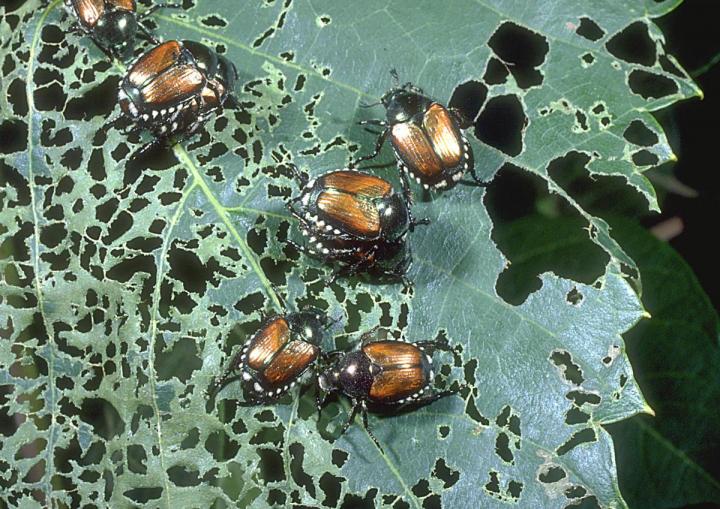
Japanese beetles are most active on sunny days and prefer to munch on plants that are in direct sunlight. Once the tissue is destroyed only the veins remain. These beetles often fly around homes due to the attraction to lamps night lights and porch lights. Since Japanese beetles dont move quickly nor do they bite or pinch you can just go to town on those little pests with your fingers wearing thin gloves if you prefer. Since many beetles feed mainly at night the gardener rarely sees them only the damage that they cause.
 Source: almanac.com
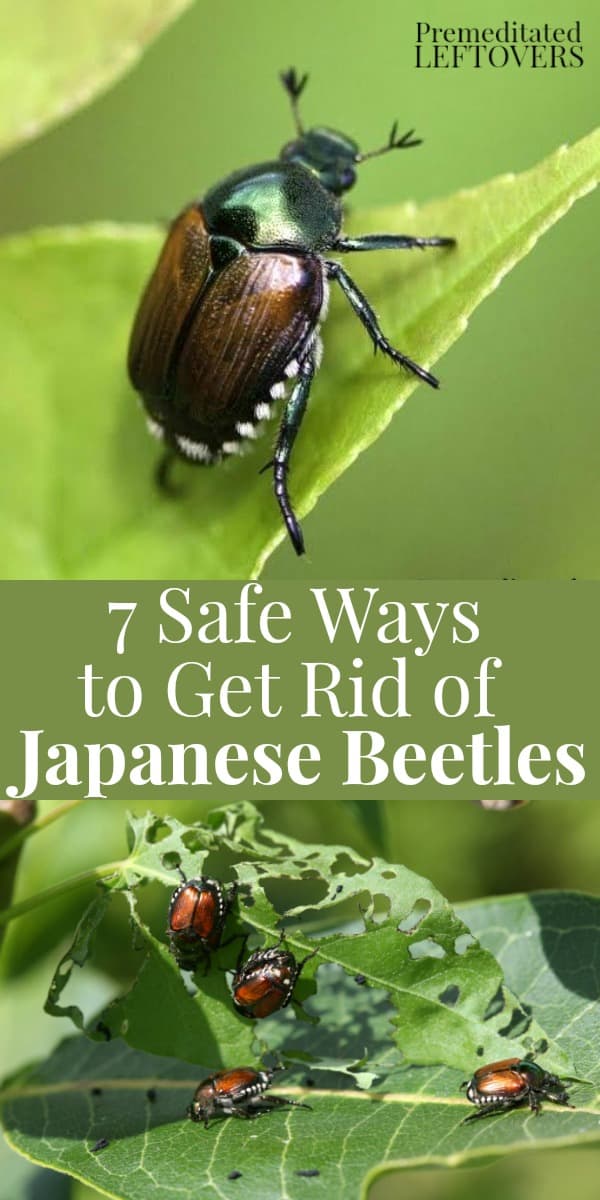
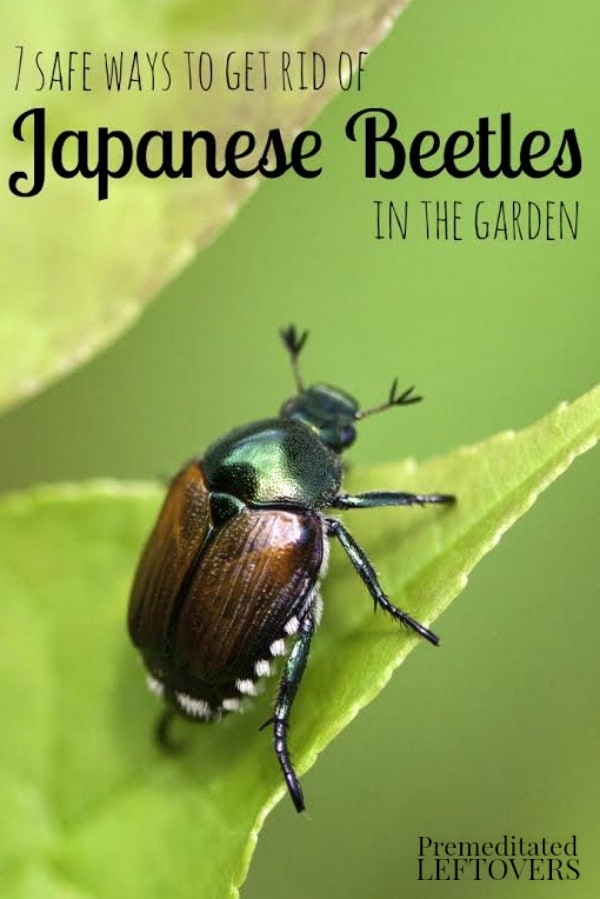
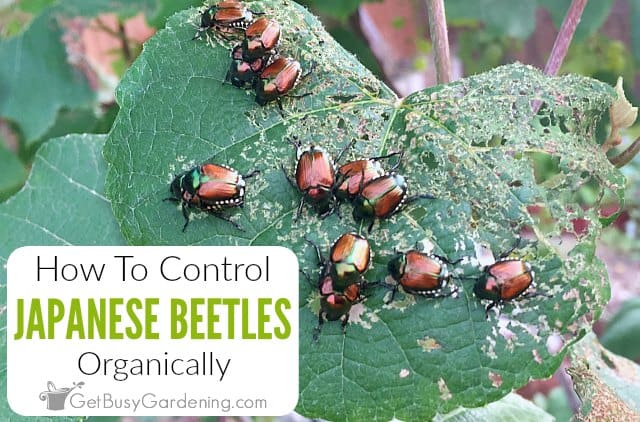
An adult Japanese beetle is about. Japanese beetles skeletonize the leaves of. After mating each female beetle lays 40-60 eggs in the soil over the course of her 30-60 day lifespan. The beetles are especially attracted to plants in direct sunlight and tend to begin feeding near the tops of the plant working their way down. They say a pictures worth a thousand words so to save you some time heres a shot of one these buggers having an afternoon snack of my grape leaves.
 Source: gardeningknowhow.com
Plants That Kill Japanese Beetles. Next day same thing. Japanese beetles are most active on sunny days and prefer to munch on plants that are in direct sunlight. Japanese beetles can damage blueberry leaves as well. The adult beetles are general herbivores and are known to feed on over 400 species of broad-leaved plants damaging leaves flowers and overripe or wounded fruit.
 Source: peststrategies.com
Not that Japanese beetles Popilia japonica are found everywhere but they are spreading throughout both Europe and North America and chances are that if your garden isnt presently under attack it will be one day soon. There are virtually no Japanese beetles eating our flowers linden trees and raspberries. Most Japanese beetles are attracted to the scent of plant oils. First thru the vegetable garden and then thru the flower gardens. Preferred plants include rose grape linden apple crabapple cherry plum and.
 Source: tomlinsonbomberger.com
Japanese beetles are most active on sunny days and prefer to munch on plants that are in direct sunlight. An adult Japanese beetle is about. If you stay proactive you can protect your yard and plants from Japanese beetle damage. The photo above doesnt do. They usually feed in groups starting at the top of a plant and working downward.
 Source: growingagreenerworld.com
These beetles often fly around homes due to the attraction to lamps night lights and porch lights. These beetles fly around dive bombing people get stuck in hair and clothing and create a mess when. There are virtually no Japanese beetles eating our flowers linden trees and raspberries. They say a pictures worth a thousand words so to save you some time heres a shot of one these buggers having an afternoon snack of my grape leaves. Japanese beetles spend most of their one-year lifecycle underground as a white c-shaped grub.
 Source: tr.pinterest.com
After mating each female beetle lays 40-60 eggs in the soil over the course of her 30-60 day lifespan. They do not harm anything in the garden but are on patrol all day. Night beetles are medium-to-large beetles that come out at night. The larvae which are called white grubs feast on the plants roots and can create dead patches on the grass. It is not very destructive in Japan where it is controlled by natural predators but in North America it is a noted pest of about 300 species of plants including rose bushes grapes.
 Source: premeditatedleftovers.com
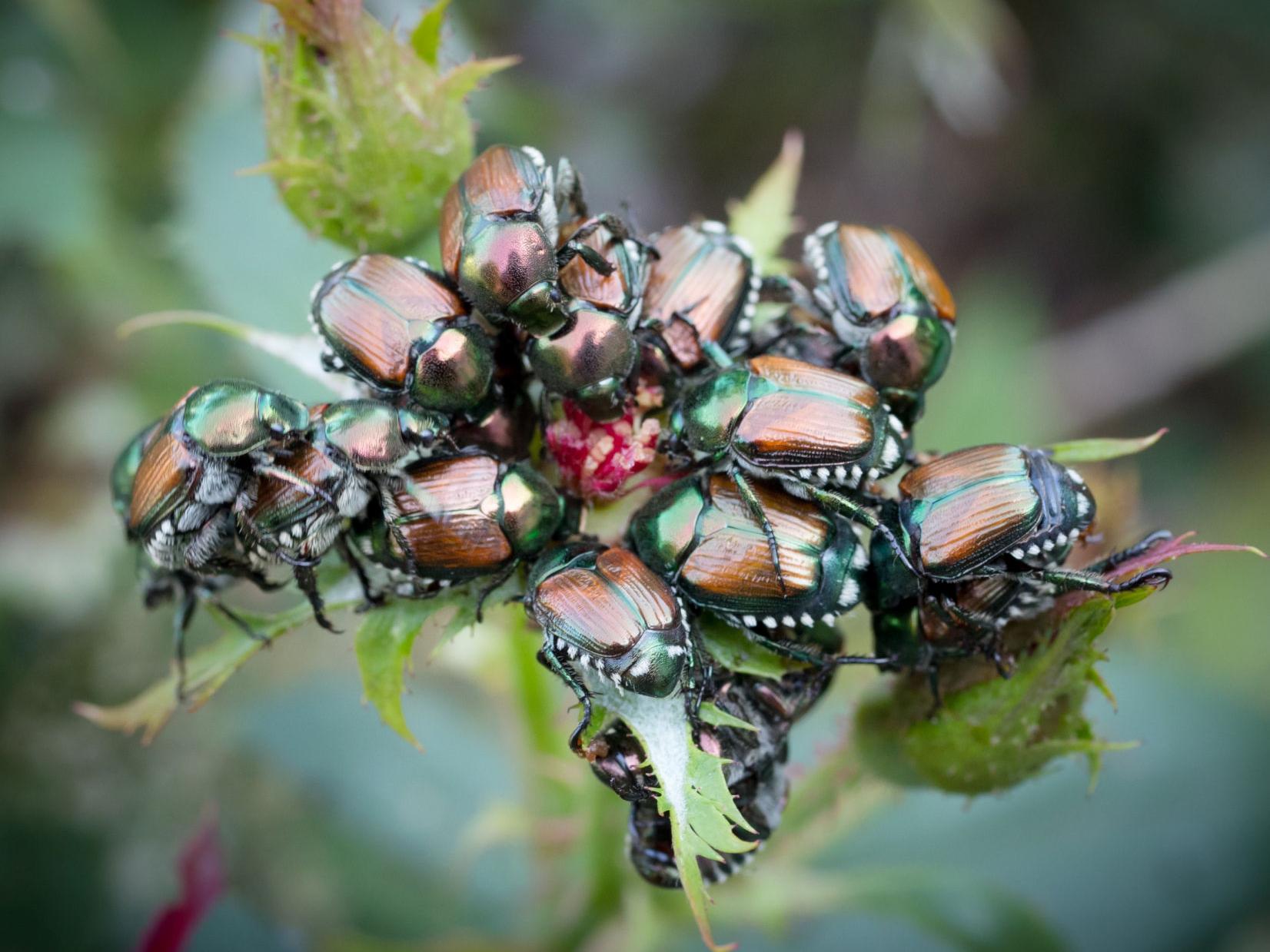
Their powerful jaws are lethal to plant tissue in between the veins. The larvae which are called white grubs feast on the plants roots and can create dead patches on the grass. Preferred plants include rose grape linden apple crabapple cherry plum and. Japanese beetles spend most of their one-year lifecycle underground as a white c-shaped grub. They usually feed in groups starting at the top of a plant and working downward.
 Source: getbusygardening.com
Get rid of the grubs Grubs are Japanese beetle larvae. They do not harm anything in the garden but are on patrol all day. Adult Japanese beetle damage. These eggs hatch into grubs in July and August. They are constantly looking up into the foilage and you can see them give a little jump and they have another Japanese Beetle.
 Source: gardentech.com
Japanese beetles are a serious pest of flowers trees and shrubs fruits and vegetables field crops and turf. WHAT DO JAPANESE BEETLES DO TO PLANTS. Not that Japanese beetles Popilia japonica are found everywhere but they are spreading throughout both Europe and North America and chances are that if your garden isnt presently under attack it will be one day soon. An adult Japanese beetle is about. The adult beetles are general herbivores and are known to feed on over 400 species of broad-leaved plants damaging leaves flowers and overripe or wounded fruit.
Source: pests.org
Next day same thing. Once the tissue is destroyed only the veins remain. After mating each female beetle lays 40-60 eggs in the soil over the course of her 30-60 day lifespan. The beetles are especially attracted to plants in direct sunlight and tend to begin feeding near the tops of the plant working their way down. They say a pictures worth a thousand words so to save you some time heres a shot of one these buggers having an afternoon snack of my grape leaves.
 Source: pests.org
Since Japanese beetles dont move quickly nor do they bite or pinch you can just go to town on those little pests with your fingers wearing thin gloves if you prefer. The adult beetles are general herbivores and are known to feed on over 400 species of broad-leaved plants damaging leaves flowers and overripe or wounded fruit. Using barriers or covering your plants such as netting will ensure that your garden does not have to deal with this problem. It is not very destructive in Japan where it is controlled by natural predators but in North America it is a noted pest of about 300 species of plants including rose bushes grapes. Japanese beetles are most active on sunny days and prefer to munch on plants that are in direct sunlight.
 Source: homesteadgardens.com
The photo above doesnt do. Once the tissue is destroyed only the veins remain. They usually feed in groups starting at the top of a plant and working downward. They are a detriment to anyones garden as the adult beetles can consume the leaves and flowers of numerous types of plants. The adult beetles are general herbivores and are known to feed on over 400 species of broad-leaved plants damaging leaves flowers and overripe or wounded fruit.
 Source: gardentech.com
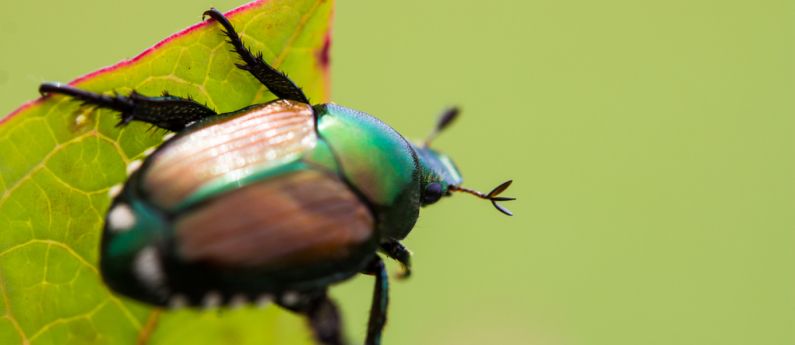
They live in big trees that have sweet sap on it such as oak trees they usually found in oak forest or woods at night Do beetles live in the arctic. Not that Japanese beetles Popilia japonica are found everywhere but they are spreading throughout both Europe and North America and chances are that if your garden isnt presently under attack it will be one day soon. The larvae which are called white grubs feast on the plants roots and can create dead patches on the grass. Where do Japanese beetles live in japan. Their powerful jaws are lethal to plant tissue in between the veins.
 Source: rescue.com
These beetles often fly around homes due to the attraction to lamps night lights and porch lights. Using barriers or covering your plants such as netting will ensure that your garden does not have to deal with this problem. Preferred plants include rose grape linden apple crabapple cherry plum and. They live in big trees that have sweet sap on it such as oak trees they usually found in oak forest or woods at night Do beetles live in the arctic. If you stay proactive you can protect your yard and plants from Japanese beetle damage.
 Source: entomology.ca.uky.edu
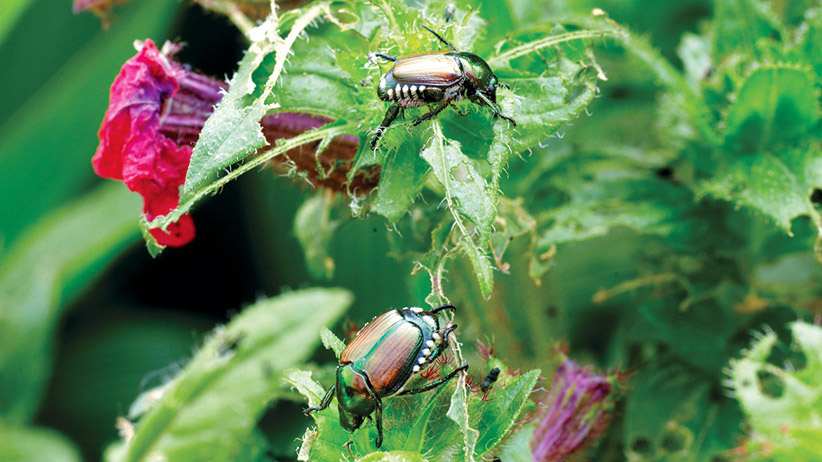
Adult Japanese beetle damage. The adult beetles are general herbivores and are known to feed on over 400 species of broad-leaved plants damaging leaves flowers and overripe or wounded fruit. These beetles often fly around homes due to the attraction to lamps night lights and porch lights. Adults feed on more than 300 plant species whereas the grubs feed mainly on the roots of grasses. There are virtually no Japanese beetles eating our flowers linden trees and raspberries.
 Source: gardengatemagazine.com
The adult beetles are general herbivores and are known to feed on over 400 species of broad-leaved plants damaging leaves flowers and overripe or wounded fruit. If your plants have been sitting on top of the soil for many months this smell could be overwhelming and attract the beetles. Japanese beetles skeletonize the leaves of. Japanese beetle season is upon us or almost upon us depending on where you live. Japanese beetles spend most of their one-year lifecycle underground as a white c-shaped grub.
 Source: omaha.com
Where do Japanese beetles live in japan. Japanese beetles can damage blueberry leaves as well. Japanese beetles Popillia japonica feed during the day and are perhaps the most readily recognized of the beetle pests that feed on plants in your garden. Once the tissue is destroyed only the veins remain. Using barriers or covering your plants such as netting will ensure that your garden does not have to deal with this problem.
This site is an open community for users to share their favorite wallpapers on the internet, all images or pictures in this website are for personal wallpaper use only, it is stricly prohibited to use this wallpaper for commercial purposes, if you are the author and find this image is shared without your permission, please kindly raise a DMCA report to Us.
If you find this site beneficial, please support us by sharing this posts to your favorite social media accounts like Facebook, Instagram and so on or you can also save this blog page with the title where do japanese beetles go at night by using Ctrl + D for devices a laptop with a Windows operating system or Command + D for laptops with an Apple operating system. If you use a smartphone, you can also use the drawer menu of the browser you are using. Whether it’s a Windows, Mac, iOS or Android operating system, you will still be able to bookmark this website.


